EN
In The Christ Appearing to the Virgin by Juan de Flandes, delicate parchment scrolls (phylacteries) slowly unroll in the air, defying the laws of physics and modern logic to make visible the sacred words exchanged between Jesus and the Virgin.
From the 19th and 20th centuries onward, these phylacteries evolved into speech bubbles in comics. Initially sacred objects in Jewish tradition, then floating elements in Renaissance paintings, they have become, in contemporary digital interfaces, standardized frames of communication. The form of the speech scroll has gradually detached from religious iconography to become part of the visual vocabulary of secular societies and popular culture.
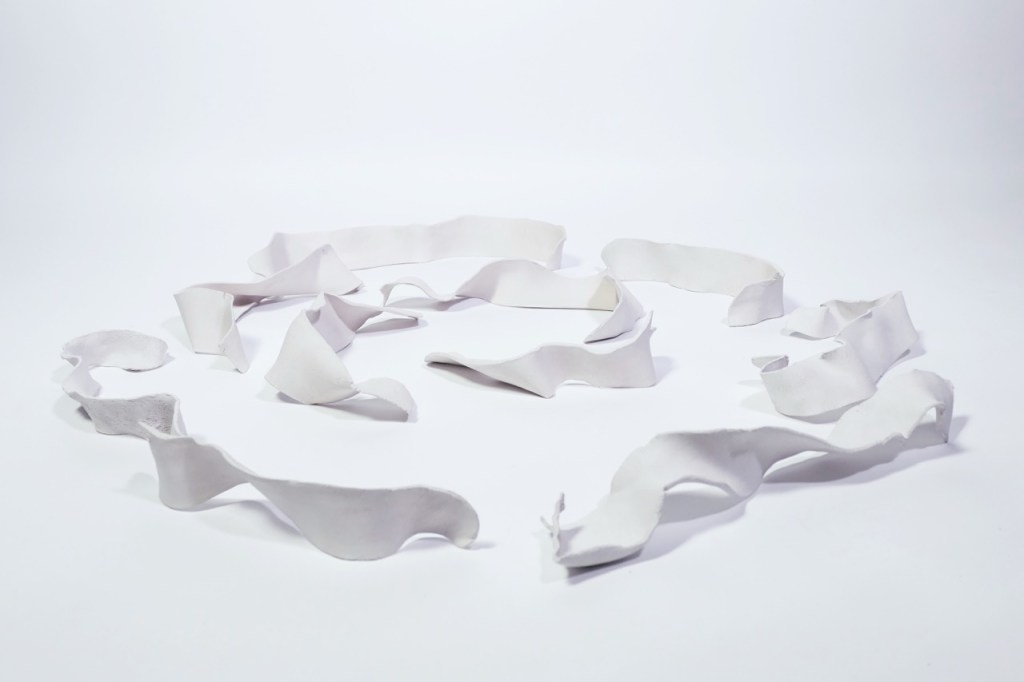
As a visual device, it establishes a paradigm of language and dialogue while standing at the boundary between image and text. It materializes narrative through gestures, postures, directions, and physical supports. Within this dual-faced structure, I seek to question the religious disenchantment at work in the transformation of these forms, but also the moments of re-enchantment in contemporary society — cyclical forms of a return of the divine.
I am also interested in the evolving relationships between text, image, and symbol in religious iconography and contemporary visual culture, especially in the digital diffusion era, where these elements recombine, disarticulate, and interlace anew.
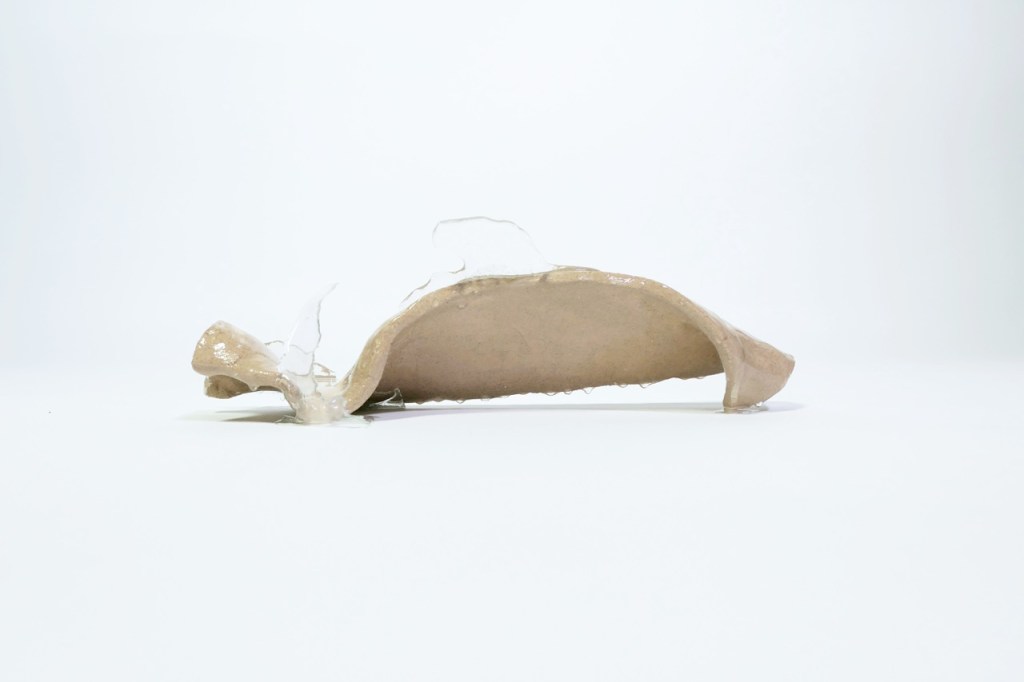
Through this series of works, I use ceramics — a traditional and symbolic medium — combined with voice (off-screen), to construct a narrative at the border between the real and the cultural imaginary, where everyday experiences meet visions of the sacred.
FR
Dans Le Christ apparaissant à la Vierge de Juan de Flandes, de légers phylactères en parchemin se déroulent lentement dans l’air, défiant les lois de la physique et la logique moderne, pour rendre visibles les paroles sacrées échangées entre Jésus et la Vierge.
À partir des XIXe et XXe siècles, ces phylactères ont évolué en bulles de dialogue dans les bandes dessinées. D’abord objets sacrés dans la tradition juive, puis éléments flottants dans les peintures de la Renaissance, ils sont devenus, dans les interfaces numériques contemporaines, des cadres standardisés de communication. La forme du speech scroll s’est progressivement détachée de l’iconographie religieuse pour s’inscrire dans le vocabulaire visuel des sociétés laïques et de la culture populaire.
En tant que dispositif visuel, il établit un paradigme du langage et du dialogue tout en se tenant à la frontière entre image et texte. Il matérialise le récit par le biais de gestes, de postures, de directions et de supports matériels. Dans cette structure à double face, je cherche à interroger la désenchantement religieux à l’œuvre dans la transformation de ces formes, mais aussi les instants de réenchantement dans la société contemporaine — formes cycliques d’un retour du divin.
Je m’intéresse également à l’évolution des relations entre texte, image et symbole dans l’iconographie religieuse et la culture visuelle contemporaine, notamment à l’ère de la diffusion numérique, où ces éléments se recomposent, se désarticulent et s’entrelacent à nouveau.
À travers cette série de créations, j’utilise la céramique — un médium traditionnel et symbolique — combinée à la voix (hors-champ), pour construire une narration à la lisière du réel et de l’imaginaire culturel, là où les expériences du quotidien rencontrent les visions du sacré.